


Posted by Dr. Litner and Dr. Solieman on October 1st, 2026
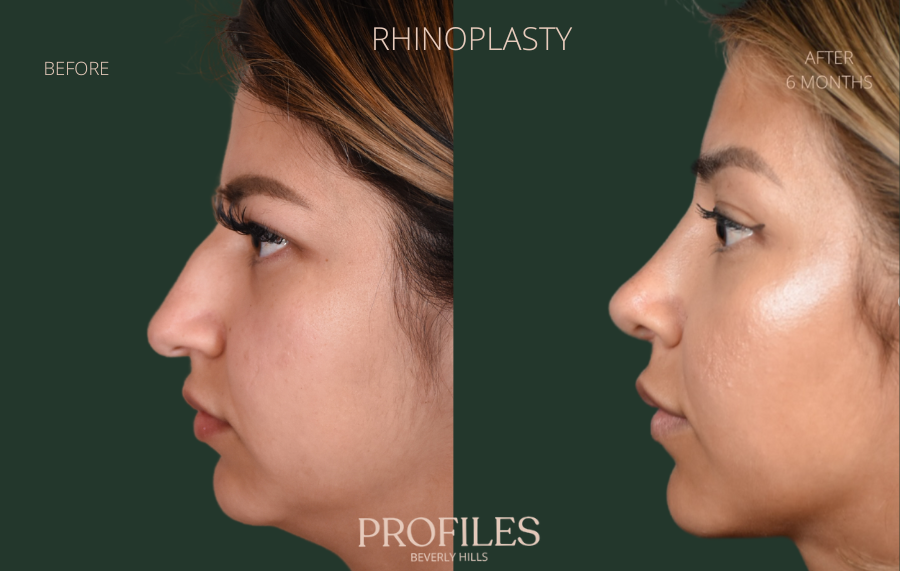
Before-and-after photos are often the first place you look when choosing a rhinoplasty surgeon. They can help you see a surgeon’s work and put words to the changes you like. They are more useful, though, when you know what you are comparing. A single dramatic side view rarely tells the whole story of a nose.
At Profiles Beverly Hills, Dr. Jason Litner and Dr. Peyman Solieman encourage patients to bring questions about the cases they see. We use photographs as a starting point for a conversation about your anatomy and goals, rather than as a prediction of your result.
Start with the angle. Is the before photograph a side view while the after photograph is slightly turned? Are the front and three-quarter views available too? A small change in head position can change how a bridge, tip, or nostril appears. Lighting, facial expression, and camera distance can also influence what stands out.
Look across several views of the same patient when they are available. The aim is to understand the overall change, not to judge an entire operation from one flattering frame.
The time between surgery and the after photograph matters. Healing and swelling continue after the first visible improvement, and the course varies between patients. A photo taken relatively early may show a different stage from one taken later. Ask when the photographs were made and what changes might still be expected in that case. This is especially relevant when you compare a first operation with a revision rhinoplasty case.
A gallery is most helpful when it includes examples related to your concern. If you are focused on a crooked nose, tip shape, bridge profile, or the result of earlier surgery, find cases that discuss those starting points. Similarity does not mean the same plan or outcome will apply to you. Skin, structure, prior surgery, and personal goals differ.
Browse our rhinoplasty gallery and make a note of the case numbers or views you would like to discuss. If you have had surgery before, the revision gallery may be more relevant than a collection of first-time procedures.
When a case description is available, read what the patient wanted to address and which changes were made. A photograph may show an attractive profile without telling you whether the patient also had a breathing concern or another procedure. Ask what the images do and do not show. Every result belongs to that patient; it is not a guarantee for another person.
You can ask: How similar is this patient’s starting point to mine? Which differences make my case more or less complex? What can you tell from my examination that a photograph cannot show? What are the possible tradeoffs and risks? How will you evaluate my result as it heals?
We want those questions in the room. Dr. Litner and Dr. Solieman can discuss the examples you bring, examine your nose, and explain what goals are realistic for you. You can learn about their backgrounds on our Meet the Doctors page, then book a consultation when you are ready to talk through your own case.
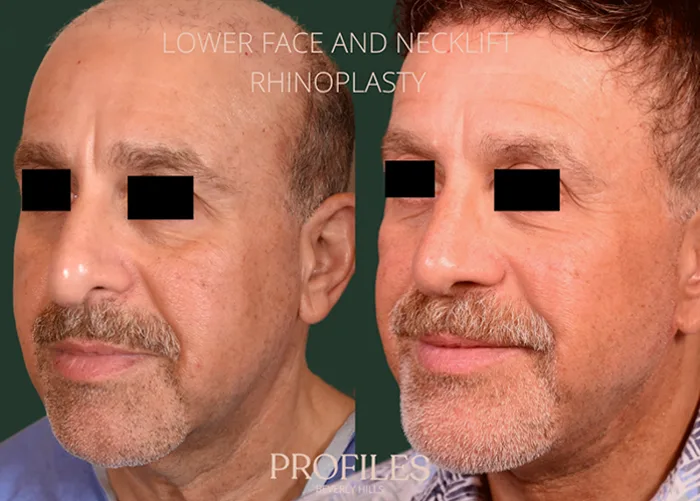
When it comes to aesthetic transformation, the narrative has often been predominantly female-centric. At PROFILES Beverly Hills,...

Understanding the Differences and Deciding What's Right for You Facial plastic surgery can sometimes feel like deciphering a...

Looking in the mirror and seeing things you would like to change? Droopy eyelids? Sunken cheeks? Loss of definition in your...

ASK US ANY QUESTION