

Posted by Dr. Litner and Dr. Solieman on November 19th, 2026
Preservation rhinoplasty has become one of the most talked-about techniques in nose surgery. The idea is simple: instead of removing the hump and rebuilding the bridge, the surgeon lowers the whole bridge as one unit and keeps its natural surface intact.
It can give a smooth, natural-looking profile in the right nose. It is not the right choice for every nose, though, and experienced surgeons choose the technique to fit the anatomy, not the other way around.
| What it does | Lowers the bridge without removing its top layer |
| Often suits | A smooth hump on a fairly straight nose, no prior surgery |
| Often not ideal | Very crooked noses, irregular humps, many revisions |
| Main benefit | Keeps the natural lines of the bridge |
| Main trade-off | A small chance the hump partly returns |
The bump on the bridge of the nose is made of bone at the top and cartilage below. In traditional hump removal, the surgeon shaves or cuts away that hump and then rebuilds the open “roof” of the nose so the bridge is smooth again.
In dorsal preservation rhinoplasty, the surgeon removes a strip of bone and cartilage underneath or at the base of the bridge, then lets the whole bridge settle lower. The top surface, including the smooth lines along the sides of the bridge, stays in one piece.
The term “preservation” is also used more broadly for techniques that keep as much of the patient’s own structure as possible, such as reshaping tip cartilage instead of removing it.
Neither is “better” in general. Each is a tool. Many surgeons use parts of both in the same operation. You can read about another common choice in open or closed rhinoplasty to reduce a bump.
Wondering if your nose is a candidate? A consultation will show which technique suits your bridge, tip and breathing.
Preservation techniques tend to suit patients who have:
A structural approach is often more predictable when:
One known trade-off is that in some patients the hump partly comes back as the nose heals. Ask your surgeon how often they see this and how it is handled.
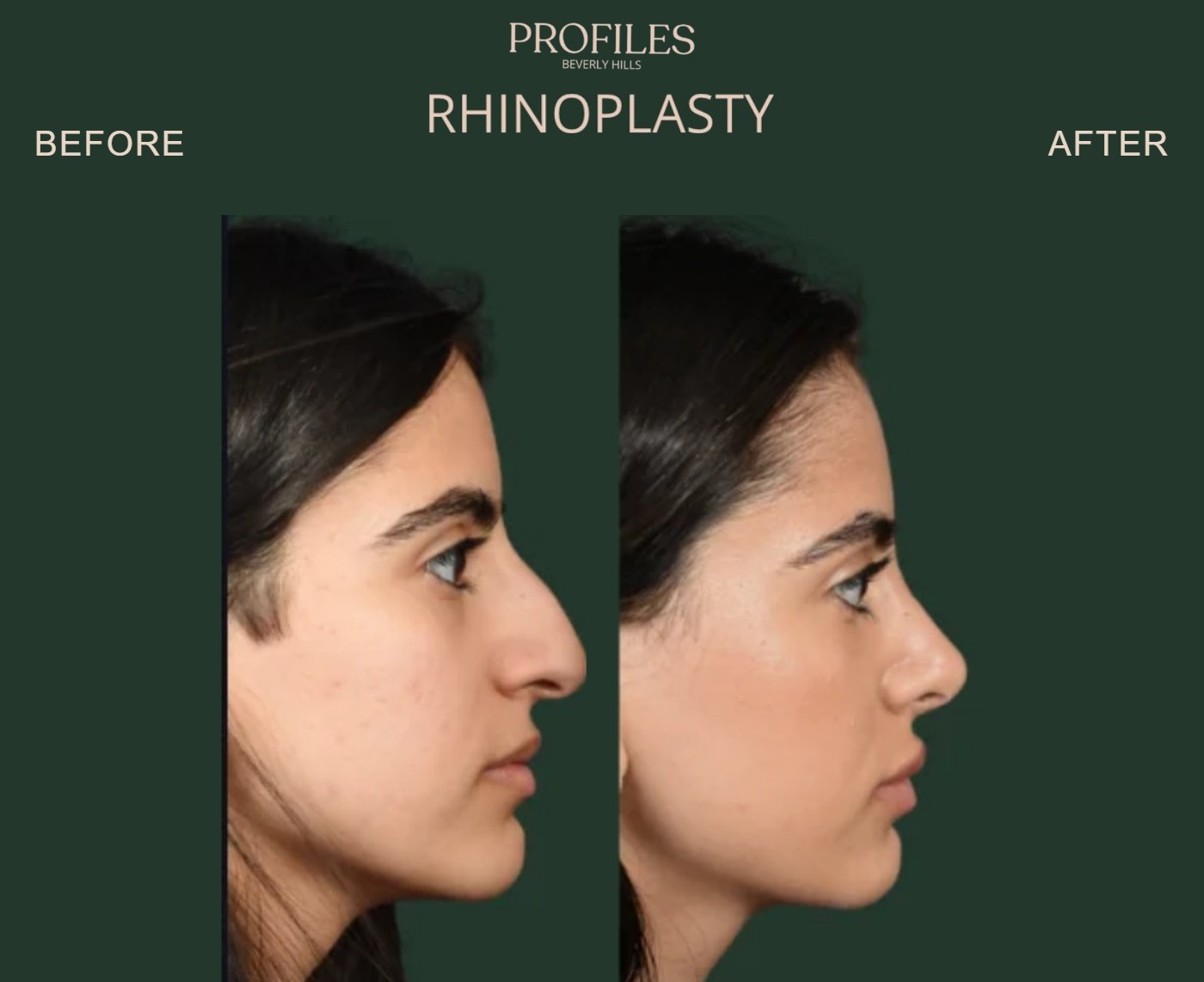
The right technique comes from an exam, not a trend. At Profiles Beverly Hills, Dr. Jason Litner and Dr. Peyman Solieman examine the bridge, tip, skin and airway together, then explain which approach fits your nose and why. Computer imaging helps you see the planned profile before surgery. Browse our rhinoplasty gallery to see real results.
Not in every case. It can give very natural lines in the right nose, while traditional structural techniques are often more predictable for crooked, irregular or previously operated noses.
Usually not. After earlier surgery the bridge has often been changed, so there is less natural structure to preserve.
In some patients, part of the hump returns as healing settles. Ask your surgeon how they reduce this risk and how it is corrected if it happens.
Recovery follows a similar pattern. Our rhinoplasty recovery timeline explains what to expect week by week.
Your surgeon decides after examining your nose and discussing your goals. Ask why a technique is recommended for your anatomy.
Dr. Jason Litner and Dr. Peyman Solieman choose the technique for each nose after a full exam, with the goal of a natural result that fits your face. Learn more about rhinoplasty.
Prefer to talk? Call (310) 276-6800.
Our team will help arrange your visit. Fields marked * are required.
This article is for general educational purposes and is not medical advice. Your surgeon will recommend a technique after an exam.

Insurance does not pay for cosmetic nose changes, but it may consider surgery that treats a documented breathing problem. Here is...

If your nose tip pulls down when you smile, a small muscle and the strength of your tip support are usually the reason. Here is...

Why rhinoplasty quotes vary so much, what a Beverly Hills quote usually covers, and the questions to ask before you compare...
ASK US ANY QUESTION